
Are you tired of constantly replacing batteries in your remote electronics? Whether you are deploying an IoT sensor node or setting up a long-range WISP relay station on a mountain peak, a reliable and renewable energy source is critical. Harnessing solar power with a battery backup provides the autonomy needed for projects far from the traditional power grid.
The Challenge: Remote Power Autonomy
Traditional energy sources are often unavailable for outdoor installations. Relying on primary (disposable) batteries leads to high maintenance costs and significant environmental waste. A self-sustaining system must capture energy during peak sunlight hours and store it for use during the night or overcast periods.
The Basic Solar Charging Circuit
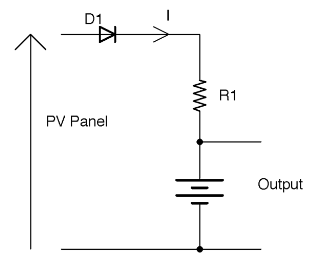
The simplest way to charge a battery from a solar panel is a "trickle charge" configuration. This requires three core components: the PV Solar Panel, a Rechargeable Battery, and a Blocking Diode. The diode is vital—it allows current to flow into the battery during the day but prevents the battery from discharging back through the panel at night.
Understanding Solar Panel Ratings vs. Reality
Solar panels are rated based on Standard Test Conditions (STC), typically 1000W/$m^2$ of light. In real-world applications, however, environmental factors like humidity, dust, and incident angle significantly reduce output.
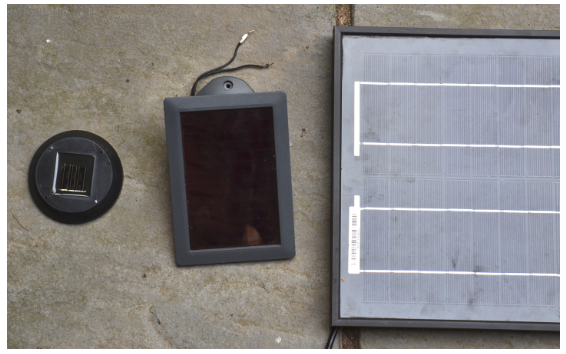
Our practical tests show a stark difference between "Nominal Power" and "Actual Power." As shown in the tables below, even high-quality 20W panels may only provide 30-40% of their rated power during typical daylight conditions. It is essential to oversize your panel to ensure your battery actually reaches a full state of charge.


Practical Engineering Considerations
- Voltage Overhead: To charge a 12V Lead-Acid battery, you need a panel that produces at least 17V-18V (Voc) to overcome the battery's internal resistance and the diode's forward voltage drop.
- Shadowing: Even a small shadow on a single cell can reduce a panel's output by more than 50%. Always clear the area of obstructions.
- Indoor Limitations: Solar panels are designed for the high-intensity spectrum of the sun. They are generally ineffective under indoor fluorescent or LED lighting for anything beyond micro-amp low-power calculators.
Conclusion
Integrating solar power into your electronics projects is a rewarding journey toward energy independence. By understanding the gap between rated and actual performance, you can build robust systems that survive the elements. Whether you are a hobbyist or a professional, leveraging real-world data ensures your next creation stays powered long after the sun goes down.
